Reclaiming the Past: Context for Revival
The Renaissance was not merely a birth of new ideas it was, in many ways, a rebirth of ancient ones. At the heart of this cultural transformation lay the rediscovery of classical antiquity, catalyzed by a series of historical and intellectual shifts that reconnected Europe with its Greco Roman roots.
A Catalyst for Rediscovery: The Fall of Constantinople
In 1453, the fall of Constantinople to the Ottoman Empire sent shockwaves through Europe. But alongside political and religious repercussions came a quieter intellectual revolution. As Byzantine scholars fled westward, they brought with them countless manuscripts and ancient texts previously lost to Western Europe.
Greek and Roman works on philosophy, science, and rhetoric resurfaced
These texts reintroduced ideas that had been neglected during the medieval period
Italian city states, particularly Florence, became hubs for translation, scholarship, and artistic reinterpretation
The Rise of Humanism
At the core of the Renaissance was humanism a philosophical movement that emphasized the potential of human achievement, shaped by the study of classical literature, art, and moral philosophy.
Artists and scholars were encouraged to pursue studies of grammar, rhetoric, ethics, and history (the studia humanitatis)
The focus shifted from strictly religious subjects to a curiosity about human nature, form, and intellect
Education increasingly drew from Latin and Greek sources, emphasizing individual reasoning and empirical observation
Philosophy Rendered in Visual Form
The ideas found in ancient texts didn’t remain in libraries or lecture halls they came alive through painting, sculpture, and architecture. Renaissance artists turned to classical philosophy as both inspiration and guiding principle.
Plato’s theory of ideal forms influenced depictions of beauty and proportion
Aristotle’s emphasis on nature guided realistic portrayals of the human body and landscape
Stoic and Neoplatonic themes appeared in works that fused classical thought with Christian ideology
By reaching back to antiquity, Renaissance thinkers and artists didn’t merely imitate the ancients they reinterpreted their legacy, shaping a visual language that defined the era and continues to influence Western culture.
Artistic Techniques Inspired by Antiquity
In the early Renaissance, artists weren’t just painting they were unpacking ancient blueprints. Naturally, one of the first things they brought back was contrapposto. Originally seen in Greek sculpture, it gave the human figure a relaxed, off center stance that looked more like how people actually stand. It was subtle but revolutionary. No more stiff, flat figures. With contrapposto came motion, weight, and intent all in a simple shift of the hips.
This realism found a partner in anatomical accuracy. Artists began dissecting bodies (sometimes in secret) to understand musculature, bone structure, and tension. The results were immediate. Figures weren’t illustrations, they were bodies alive, breathing, flawed. Think of Michelangelo’s David: not just idealized, but meticulously studied.
But the shift wasn’t just human. It was also spatial. Linear perspective, rooted in ancient Roman and Arabic optical study, was formalized by painters like Brunelleschi and later Piero della Francesca. With a vanishing point and a grid, artists could build worlds that made sense to the eye. Suddenly, paintings had depth, space, and architecture you could imagine walking through. It didn’t just change art it changed how people saw themselves moving through the world.
Classic techniques didn’t stay in the past. They were retooled for a new generation hungry for clarity, order, and control and the visual confidence that came with it.
Mythology, Philosophy, and Pagan Imagery
By the mid 15th century, Europe was seeing a strange return: gods, nymphs, and muses reappeared in art, despite the continent’s dominant Christian worldview. This wasn’t about religious blasphemy it was about intellectual legacy. Scholars and artists were re engaging with ancient texts newly accessible after the fall of Constantinople, where displaced Greek thinkers brought classical manuscripts westward. These stories weren’t just myths now they were moral allegories, philosophical tools, and aesthetic blueprints.
Botticelli’s The Birth of Venus captures this shift perfectly. Painted around 1485, it shows the goddess Venus arriving on the shore, idealized and almost divine in her innocence. This image wasn’t made to resurrect pagan worship. Instead, it was a symbol rich composition marrying beauty, virtue, and humanistic ideals. Venus becomes a cipher not for sensuality alone, but for divine love and spiritual awakening, especially through the lens of Neoplatonism, where earthly beauty reflects a higher, immaterial truth.
Neoplatonism was the bridge. It gave Renaissance thinkers a framework to reconcile classical mythology with Christian doctrine. The old gods were no longer forbidden they were metaphors. In artworks like Botticelli’s, myth and faith didn’t compete; they coexisted, layered in meaning. As a result, mythology, long dormant in Europe, found new life not as religion, but as a powerful visual and philosophical language.
Architecture as a Visual Continuity
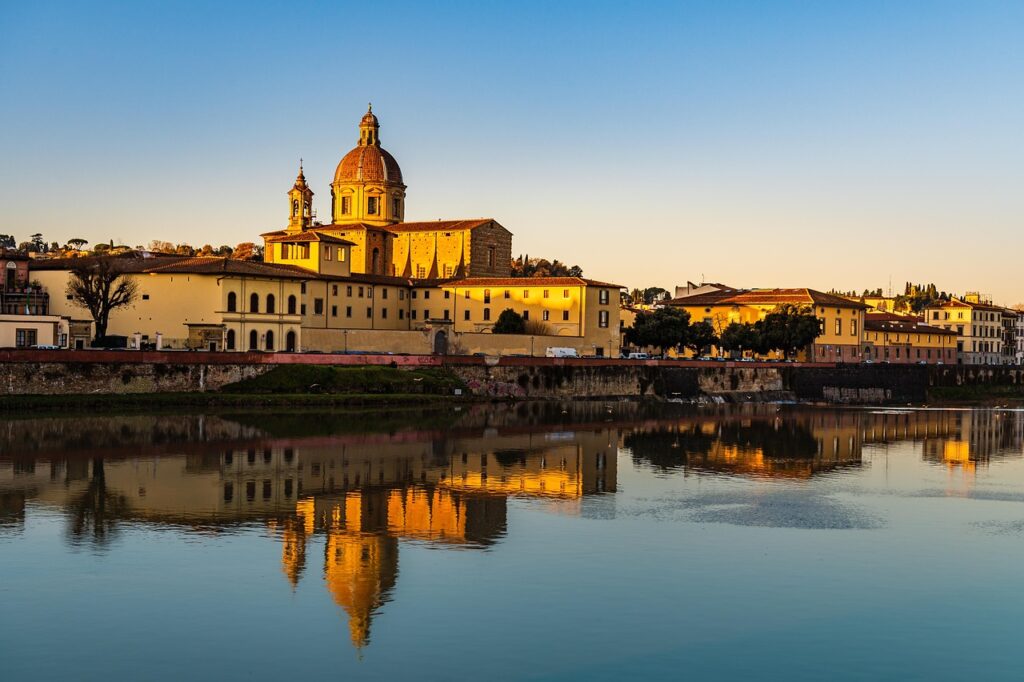
Brunelleschi didn’t reinvent the wheel he studied it, measured it, and set it spinning again with purpose. After a trip to Rome, where he sketched ruined aqueducts and pagan temples, he brought back more than admiration. He brought back a blueprint. His work on the Florence Cathedral dome wasn’t just an engineering marvel it was a manifesto. Large scale brickwork without scaffolding? That was the Roman way, reimagined.
What made his style stick was its backbone: columns laid out with geometric precision, arches cut with mathematical care, domes engineered to sit like planets in orbit. These weren’t just structures. They were statements of balance, of human intention, of a civilization worth remembering. The architectural language said: we know where we come from.
Cities followed suit. Public squares took on clean lines and central symmetry. Civic buildings echoed the layouts of basilicas. Everything had a place. Roads led to focal points. Facades followed proportional logic. It wasn’t copy paste nostalgia. It was a conscious return to order, using form to project meaning discipline, dignity, permanence.
Roman engineering gave the Renaissance more than materials. It gave it direction.
Case Study: Raphael and the Classical Canon
Raphael’s The School of Athens, painted between 1509 and 1511, isn’t just a fresco it’s a manifesto. Sitting at the heart of the Vatican’s Stanza della Segnatura, the work captures the intellectual heartbeat of the Renaissance: a deep reverence for classical antiquity blended seamlessly into contemporary thought.
At first glance, you’re looking at Plato and Aristotle standing center stage, mid conversation. But peer closer, and the painting becomes more than a roll call of Greek philosophers it’s a scene populated by Renaissance ideals. Raphael modeled the figures on people he knew: Plato bears the likeness of Leonardo da Vinci, Heraclitus wears the face of Michelangelo, and scholars argue across the steps as if overheard in a lively university courtyard. The architecture mirrors Roman grandeur perfect arches, heavy columns, a domed ceiling giving the entire scene weight and legitimacy.
This wasn’t just aesthetic nostalgia. Raphael was making a case. By placing ancient minds in modern faces and Renaissance settings, he was arguing that the road to human progress runs straight through classical learning. Logic, ethics, science, and art these weren’t just historical curiosities. They were tools to rebuild society, with reason as the lead architect.
In The School of Athens, classical philosophy isn’t behind us it’s the ground we’re standing on.
Connecting the Medieval Thread
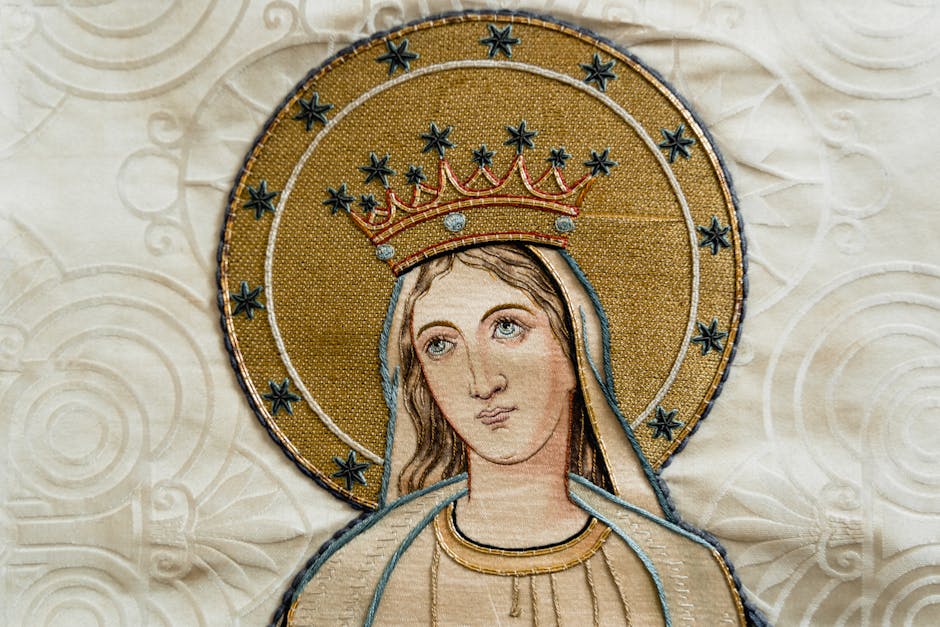
It’s tempting to see the Renaissance as a clean break from the past a full reset to the rational clarity of classical forms. But that’s not the whole story. Before Raphael, before da Vinci, medieval art laid the groundwork. It just spoke a different language. Early Christian art, with its flattened spaces and symbolic figures, wasn’t trying to depict the world exactly as it looked it aimed to communicate spiritual realities. Think gold backgrounds, icon eyes that stared through you not at you.
Renaissance artists didn’t ditch this entirely. In fact, they borrowed more than they abandoned. The emotional power, the narrative focus, the embedded symbolism all of that carried forward. Painters like Giotto blurred the lines between late medieval style and early Renaissance innovation. Eventually, artists added depth, perspective, and anatomy, but the impulse to tell stories and evoke transcendence stayed intact.
So the shift wasn’t a swap. It was an evolution layering new techniques over a rich visual heritage. To understand Renaissance art in full, you need to see what came before, and what remained beneath the surface.
(Explore more in Decoding Symbolism in Medieval European Art)
Legacy in Today’s Visual Culture
The Renaissance didn’t just echo antiquity it carved a lasting groove into the foundation of modern aesthetics. Step into any art academy or architecture school today, and you’ll still find the ghost of classical balance, proportion, and form at the heart of instruction. The Renaissance turned the Greco Roman ideal into a teaching standard: anatomy studies, perspective grids, and the golden ratio became less curiosities and more like gospel.
In sculpture, the influence is straightforward. Whether it’s 19th century neoclassicism or 21st century public monuments, the body is still often idealized through the lens of Renaissance standards. Think clean lines, poise, and the illusion of motion the same visual DNA Michelangelo massaged into marble.
Architecture follows suit. Symmetry, columnar order, and spatial hierarchy persist in both civic buildings and luxury homes, direct descendants of Brunelleschi’s Domes and Palladio’s villas. Even modern minimalists nod to classical restraint with clean angles and functional elegance.
Film doesn’t escape the lineage either. Directors frame shots using Renaissance principles foregrounding perspective, arranging symmetry, or placing figures like they’re in a Raphael tableau. In prestige cinema and advertising alike, the classical ideal anchors visual storytelling.
By 2026, this aesthetic mold hasn’t just endured it’s been remixed, challenged, and reimagined. But at its core, the Renaissance carved out an ideal: clarity, form, unity. It still quietly shapes how we define beauty, purpose, and craft.