Imagine a human arm, not just skin and bone, but a living chronicle. Symbols of courage, status, and spiritual power etched into the flesh.
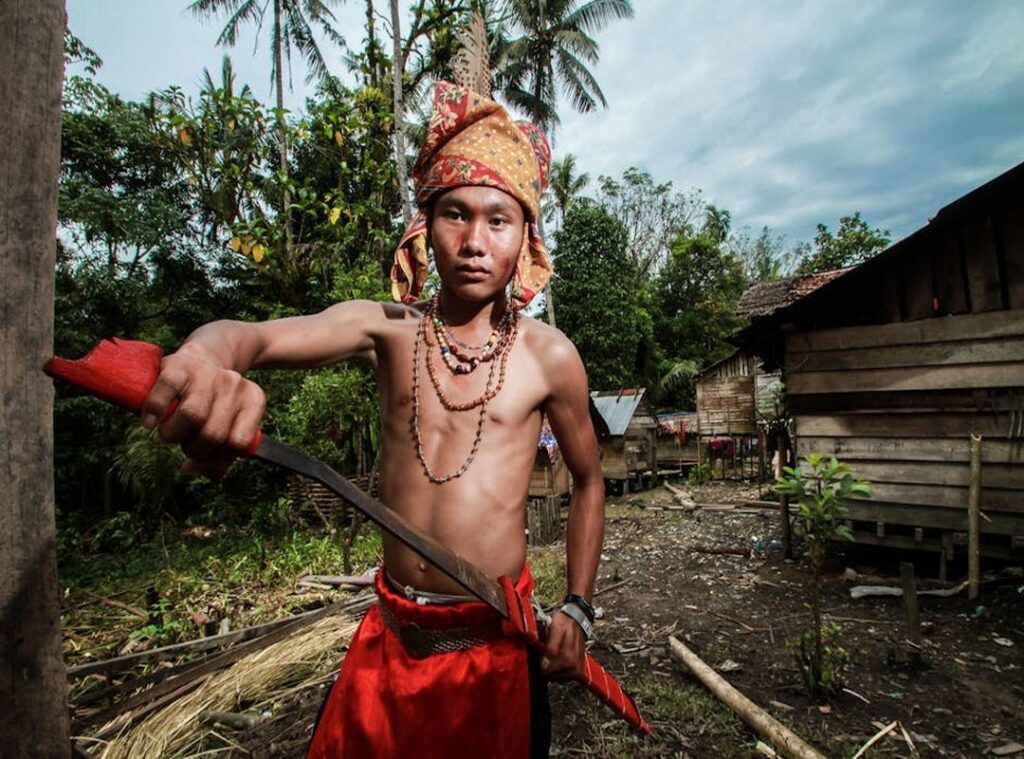
The Iban people of Borneo have an ancient, sacred tradition of tattooing called ‘pantang’. It’s more than just art; it’s a way of life.
In this article, we’ll explore the deep history, artistic significance, and powerful symbolism of dayak tattoo iban di lengan. These tattoos are like a visual language, telling stories of a culture and its people.
Today, there’s a resurgence of this art form. People are getting these tattoos, but do they really understand what they mean? Understanding the roots is more important than ever.
Join me on this journey. Let’s dive into a world where ink isn’t just decoration—it’s a story waiting to be told.
More Than Ink: The Sacred History of Iban ‘Pantang’
For the Iban, pantang is a deeply spiritual ritual, not just body decoration. It’s a rite of passage and a connection to their rich cultural heritage.
The practice of pantang is closely linked to the bejalai, a journey or pilgrimage that was once a rite of passage for men. This journey often involved headhunting, a practice that has long since been abandoned.
The traditional tattooing process is intricate and meaningful. A tukang pantak (tattoo artist) uses a hand-tapping technique with bamboo or bone needles. The ink, made from soot and sugar cane, is applied with precision and care.
Tattoos were seen as spiritual armor, providing protection from malevolent spirits. They also signified a person’s life achievements and social standing. These markings were believed to guide the soul in the afterlife, acting as a torch in the darkness.
Distinct traditions exist for men’s and women’s tattoos. For men, arm tattoos, known as dayak tattoo iban di lengan, were particularly significant. These tattoos were a testament to their journeys and accomplishments.
Women, on the other hand, had their own unique designs, often focusing on different parts of the body. Each design carried its own meaning and significance, reflecting the individual’s role and status within the community.
Understanding the deep spiritual and cultural significance of these tattoos gives us a window into the Iban’s rich history and traditions.
Reading the Story on the Skin: Common Arm Motifs and Their Meanings
In Iban culture, the arm is a canvas for telling life stories. It’s where you see the most intricate and meaningful tattoos. The ‘Bunga Terung’ or Bornean Rosette, for example, is a spiral design placed on the front of the shoulders.
This symbol marks a new beginning, offers protection, and signifies manhood. It’s like a rite of passage, a badge of honor.
The scorpion, known as ‘kala,’ and the centipede, ‘ketam,’ are other powerful motifs. These creatures are believed to be protective guardians. They shield the wearer from sickness and harm.
Imagine having these symbols on your skin, like a shield against the world’s dangers.
Full-sleeve tattoos in Iban culture were not just for show. Each element was earned over a lifetime, representing major accomplishments or journeys. It’s like a visual diary, with each tattoo telling a part of the story.
Every new design added another chapter to the narrative.
The placement and combination of these symbols created a unique biography. It was readable to others within the community. You could look at someone’s arm and know their history, their achievements, and their struggles.
It’s a way of carrying your life story with you, always visible, always a part of who you are.
These intricate, dark-blue patterns stand out against the skin. They’re not just designs; they’re a part of the person. Dayak tattoo iban di lengan, for instance, tells a rich, personal story.
It’s a tradition that’s both beautiful and deeply meaningful.
The Artistry of the Line: Visual Elements of Dayak Tattooing
The Iban tattoo art is a stunning example of how visual elements can blend with cultural significance. Let’s dive into the aesthetic principles that make it so unique.
Bold, Black Linework and Intricate Patterns
Iban tattoos are known for their strong use of bold, black linework. These lines are not just decorative; they create intricate patterns that tell stories and symbolize various aspects of Iban culture. The intelligent use of negative space adds definition and flow, making each design visually striking.
Following the Body’s Contours
Traditional designs are masterfully crafted to follow the contours and musculature of the arm. This makes the art a dynamic part of the body itself. For instance, dayak tattoo iban di lengan (Iban tattoo on the arm) often features designs that move with the natural lines of the muscles, enhancing the overall aesthetic.
Hand-Tapped vs. Modern Machines
The organic, slightly imperfect quality of traditional hand-tapped lines contrasts with the precision of modern tattoo machines. Hand-tapped tattoos have a unique texture and character, adding a personal touch that machine work can’t replicate. It’s like comparing a hand-drawn sketch to a digitally perfect image.
The Skill of the ‘Tukang Pantak’
The incredible skill of the ‘tukang pantak’ (tattoo artist) lies in creating complex, often symmetrical designs freehand, without the use of stencils. This level of craftsmanship is truly remarkable and speaks to the deep connection between the artist and the tradition.
Connection to the Natural World
The visual style of Iban tattoos is deeply connected to the natural world of Borneo. Animal and plant forms are abstracted into powerful geometric and curvilinear shapes. This abstraction not only enhances the visual appeal but also ties the designs back to the rich biodiversity of the region.
If you’re interested in learning more about the art historical perspective of these and other traditional art forms, check out Arcyhist.
From Borneo to the World: The Modern Revival of an Ancient Art
The ancient art of Iban and Dayak tattooing is making a comeback. Not just in Borneo, but around the world.
It’s important to understand the difference between authentic cultural practice and purely aesthetic ‘Iban-inspired’ tattoos. Authenticity matters.
Cultural appreciation over appropriation should be the guiding principle. Seek out artists with a genuine connection to the heritage. Understand the meaning behind the symbols you choose.
This revival is a powerful tool for cultural preservation and identity. It’s especially meaningful for young Iban people.
Some modern artists are respectfully evolving the tradition. They blend classic motifs with contemporary styles while maintaining the core symbolism.
For example, dayak tattoo iban di lengan combines traditional designs with modern techniques. This fusion keeps the art form alive and relevant.
A Legacy Etched in Skin
dayak tattoo iban di lengan are a profound visual language, a fusion of art, identity, and spirituality. These markings transcend mere decoration; they symbolize a person’s journey and a culture’s history. Originating from the longhouses of Borneo, this unique art form has now found its place on the global stage of tattoo art.
As these tattoos carry ancestral stories and cultural pride into the future, they continue to inspire and connect people across generations.
 Brian Ochoaller writes the kind of creative inspiration from the past content that people actually send to each other. Not because it's flashy or controversial, but because it's the sort of thing where you read it and immediately think of three people who need to see it. Brian has a talent for identifying the questions that a lot of people have but haven't quite figured out how to articulate yet — and then answering them properly.
They covers a lot of ground: Creative Inspiration from the Past, Art Movements Explained, Exhibition Reviews and Highlights, and plenty of adjacent territory that doesn't always get treated with the same seriousness. The consistency across all of it is a certain kind of respect for the reader. Brian doesn't assume people are stupid, and they doesn't assume they know everything either. They writes for someone who is genuinely trying to figure something out — because that's usually who's actually reading. That assumption shapes everything from how they structures an explanation to how much background they includes before getting to the point.
Beyond the practical stuff, there's something in Brian's writing that reflects a real investment in the subject — not performed enthusiasm, but the kind of sustained interest that produces insight over time. They has been paying attention to creative inspiration from the past long enough that they notices things a more casual observer would miss. That depth shows up in the work in ways that are hard to fake.
Brian Ochoaller writes the kind of creative inspiration from the past content that people actually send to each other. Not because it's flashy or controversial, but because it's the sort of thing where you read it and immediately think of three people who need to see it. Brian has a talent for identifying the questions that a lot of people have but haven't quite figured out how to articulate yet — and then answering them properly.
They covers a lot of ground: Creative Inspiration from the Past, Art Movements Explained, Exhibition Reviews and Highlights, and plenty of adjacent territory that doesn't always get treated with the same seriousness. The consistency across all of it is a certain kind of respect for the reader. Brian doesn't assume people are stupid, and they doesn't assume they know everything either. They writes for someone who is genuinely trying to figure something out — because that's usually who's actually reading. That assumption shapes everything from how they structures an explanation to how much background they includes before getting to the point.
Beyond the practical stuff, there's something in Brian's writing that reflects a real investment in the subject — not performed enthusiasm, but the kind of sustained interest that produces insight over time. They has been paying attention to creative inspiration from the past long enough that they notices things a more casual observer would miss. That depth shows up in the work in ways that are hard to fake.