The Rebellion Against Tradition
In 19th century France, the art world was tightly controlled by the Académie des Beaux Arts, a powerful institution that dictated the standards of “good art.” This meant that creativity was often boxed into rigid expectations, leaving little room for experimentation or personal expression.
The Academic Art Establishment
For decades, academic art reigned supreme. It championed specific rules and techniques that artists were expected to follow:
Subjects: Preferred themes included history, mythology, religion, and allegory considered noble and worthy.
Technique: Artists were trained to use smooth, invisible brushwork, creating a finish so polished it eliminated any trace of the artist’s hand.
Figures: Bodies and faces were often idealized, symmetrical, and flawless, reflecting a classical, almost perfected world.
This system was enforced through the annual Salon, the official exhibition of the Académie. Only approved works could be shown, and public recognition hinged on being included.
The Impressionist Uprising
Emerging artists like Claude Monet, Camille Pissarro, and Édouard Manet challenged these conventions by embracing natural light, modern life, and loose, expressive brushwork. Rather than painting legendary battles or heroic dramas, they painted street scenes, parks, and cafés everyday life, observed directly.
Their rejection from the Salon wasn’t just about technique. It was about ideology:
Too informal: Their visible brushstrokes were seen as sloppy and unrefined.
Too modern: Depicting common people in casual settings felt undignified to academic judges.
Too radical: Using color and light to capture fleeting impressions was misunderstood and dismissed as amateurish.
Many early Impressionists were mocked by critics. The very term “Impressionist” was coined as an insult after Monet’s “Impression, Sunrise” calling it little more than a sketch. But what was seen as rebellion would soon be recognized as revolution.
The Power of Perception
Impressionism marked a dramatic shift from traditional art in both subject matter and technique. Rather than focusing on historical scenes or mythological ideals, Impressionists sought to capture life as it was actually seen moment to moment, fleeting and unpredictable.
Everyday Life in Motion
In contrast to posed and staged compositions, Impressionist paintings reflect the ordinary world. Whether it was a bustling street, a quiet garden, or a group of friends at leisure, artists embraced the reality of the present.
Scenes from modern life replaced classical or religious narratives
Common subject matter included: cafes, parks, train stations, and riversides
The emphasis was on spontaneity and natural presence
The Signature Look: Color, Texture, and Light
Visually, the style was groundbreaking. Impressionists used daring techniques that academic art rejected at the time.
Loose brushstrokes that left the texture visible, often unfinished in appearance
Vibrant color palettes, sometimes using pure pigment right from the tube
Light and shadow were painted in real time, capturing specific times of day or weather conditions
This intentional lack of polish is what allowed the works to evoke an authentic “impression” of a moment.
Painting Impressions, Not Perfection
Rather than meticulously blending every form, Impressionists embraced imperfection. Their goal wasn’t to recreate scenes photographically, but to evoke emotional and sensory responses.
Blurred outlines and quick gestures prioritized feeling over form
The viewer fills in the details engagement becomes part of the experience
The emotional truth of a scene mattered more than precision
By focusing on perception itself how humans actually see and feel in the world Impressionists redefined what art could be. They invited viewers to step into the moment, not just admire it from afar.
Technology’s Unexpected Role

Sometimes a revolution starts with a box of paint and a stroll through the park. The rise of portable paint tubes in the mid 19th century let artists step outside their studios and mix colors on the fly. For the first time, the light, air, and chaos of the street could be captured in the moment not reconstructed later from sketches. Ready made pigments also expanded palettes. Suddenly, colors like chrome yellow or cobalt blue weren’t rare luxuries. They were tools that let artists match the world more intuitively, more vividly.
Then came the camera. Rather than killing painting, early photography gave painters a kind of freedom they didn’t know they needed. Artists were no longer responsible for photographic realism. A machine could do that. So paint could do something else: mood, motion, imperfection.
And the cities were changing too. Urbanization brought cafés, crowded boulevards, rail stations, and Sunday leisure. Impressionists didn’t just paint what was new they painted how it felt to live in the now. That sense of immediacy, and the tech that made it possible, cracked open the art world for good.
Key Players Who Reshaped the Canvas
Impressionism wasn’t a one man show it was a loose alliance of bold experimenters, each bringing their own slant to color, light, and motion. Monet made fog and water lilies iconic. Degas gravitated toward urban scenes and candid backstage moments. Renoir chased warmth and connection with soft portraits and sunlit gatherings. They moved together but painted with personal rhythm.
Then came artists like Berthe Morisot, who did more than keep up they pushed past the societal limits placed on women in the art world. While male peers had freer access to subjects and studios, Morisot found ways to elevate domestic life and the feminine experience with equal energy and innovation. Mary Cassatt did the same across the Atlantic.
Despite diverging themes and techniques, these artists stayed united under a shared mission: to reflect modern life as it felt not how tradition said it should look. Impressionism didn’t demand uniformity. It encouraged diversity within focus. Each canvas added a new, vital voice to the movement.
Legacy That Still Colors Today’s Art
Impressionism didn’t just shake the canvas it shifted the system. By turning away from official salons and organizing their own independent exhibitions, the Impressionists took control of how their work was seen and by whom. That move redefined the art world. Suddenly, artists weren’t waiting for a committee’s approval. They were creating their own platforms.
That rebellious spirit paved the way for movements like Post Impressionism, Fauvism, and Abstract art. Creators like Van Gogh, Matisse, and even Kandinsky took cues from Impressionist freedom of color, of form, of feeling and pushed it further. Each wave leaned progressively more into self expression.
Today, that influence still spills across art schools, galleries, and social media. Painters continue to study Impressionist techniques not just for their visual style, but for the mindset behind them: see the world your way, paint it on your terms.
(See related artists and works in our oil painting directory)
Where to Dig Deeper
Seeing an Impressionist painting online isn’t the same as standing in front of it. In person, the texture hits you first thick, expressive brushstrokes that break the surface. The colors feel alive in a way no screen can deliver. Shadows shimmer with blues and violets. Highlights pulse with warm yellows. There’s a physicality to the work layers built up quickly, confidently, and without apology.
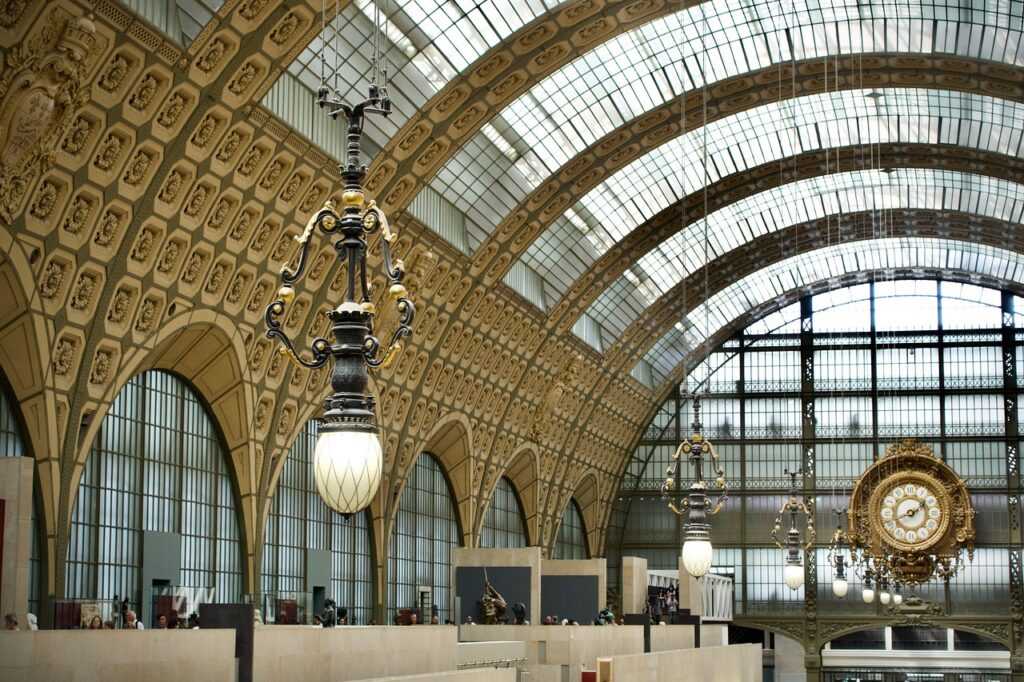
For anyone serious about understanding Impressionism, a visit to a museum is non negotiable. Museums like the Musée d’Orsay in Paris, the Art Institute of Chicago, and the Metropolitan Museum of Art in New York house some of the best examples. Get close. Step back. Take your time.
Can’t travel? Digital archives are catching up. The Google Arts & Culture platform features ultra high resolution scans that let you zoom in on individual brush hairs. Major institutions are digitizing their full collections, often with thoughtful curation. Pair that with a smart reading list and you can tackle a deeper appreciation from your screen just don’t stop there.
(Browse more in our comprehensive oil painting directory)
 Brian Ochoaller writes the kind of creative inspiration from the past content that people actually send to each other. Not because it's flashy or controversial, but because it's the sort of thing where you read it and immediately think of three people who need to see it. Brian has a talent for identifying the questions that a lot of people have but haven't quite figured out how to articulate yet — and then answering them properly.
They covers a lot of ground: Creative Inspiration from the Past, Art Movements Explained, Exhibition Reviews and Highlights, and plenty of adjacent territory that doesn't always get treated with the same seriousness. The consistency across all of it is a certain kind of respect for the reader. Brian doesn't assume people are stupid, and they doesn't assume they know everything either. They writes for someone who is genuinely trying to figure something out — because that's usually who's actually reading. That assumption shapes everything from how they structures an explanation to how much background they includes before getting to the point.
Beyond the practical stuff, there's something in Brian's writing that reflects a real investment in the subject — not performed enthusiasm, but the kind of sustained interest that produces insight over time. They has been paying attention to creative inspiration from the past long enough that they notices things a more casual observer would miss. That depth shows up in the work in ways that are hard to fake.
Brian Ochoaller writes the kind of creative inspiration from the past content that people actually send to each other. Not because it's flashy or controversial, but because it's the sort of thing where you read it and immediately think of three people who need to see it. Brian has a talent for identifying the questions that a lot of people have but haven't quite figured out how to articulate yet — and then answering them properly.
They covers a lot of ground: Creative Inspiration from the Past, Art Movements Explained, Exhibition Reviews and Highlights, and plenty of adjacent territory that doesn't always get treated with the same seriousness. The consistency across all of it is a certain kind of respect for the reader. Brian doesn't assume people are stupid, and they doesn't assume they know everything either. They writes for someone who is genuinely trying to figure something out — because that's usually who's actually reading. That assumption shapes everything from how they structures an explanation to how much background they includes before getting to the point.
Beyond the practical stuff, there's something in Brian's writing that reflects a real investment in the subject — not performed enthusiasm, but the kind of sustained interest that produces insight over time. They has been paying attention to creative inspiration from the past long enough that they notices things a more casual observer would miss. That depth shows up in the work in ways that are hard to fake.