Reading Between the Brushstrokes
In the Renaissance, religious art wasn’t just nice to look at. It was a theological tool. Symbolism in these works ran deep because most viewers weren’t reading scripture they were looking at it. Artists knew this. So they embedded whole belief systems into visual language. A goldfinch in a child’s hand could signal Christ’s future suffering. A lily in an angel’s grasp meant purity, a nod to the Virgin Mary.
These symbols weren’t accidental. They were calculated. Artists worked like silent theologians, sneaking deep concepts into surfaces that felt familiar. Buyers, mostly churches or well off patrons, wanted images that taught, warned, or guided. This wasn’t wall candy it was doctrine made visual.
For the viewer, the job wasn’t passive. Looking was a form of meditation. Disciples were meant to dwell on details, find meaning in folds of fabric, or read a moral from a fruit bowl. What’s clear is this: Renaissance religious art had layers, and the surface was just the beginning.
Common Christian Symbols and Their Meanings
Renaissance painters knew their audiences weren’t just there for beauty they were scanning for meaning. Art was packed with spiritual shorthand. Case in point: the lamb, the dove, and the serpent. These weren’t just animals; they were compact sermons. The lamb often stood in for Christ’s sacrifice, pure and willing. The dove, meanwhile, showed up when peace or the Holy Spirit entered the scene. And the serpent? Almost always bad news think temptation, sin, or betrayal. One glance, and viewers knew what moral stakes were in play.
Color coding also signaled deeper truths. Red wasn’t just striking it pointed to blood, martyrdom, and divine love. Blue was the realm of the sacred: Mary’s robes, heavenly skies, and the infinite. These weren’t style choices. They were theology in pigment.
Then there are halos, hand gestures, and the direction of a character’s gaze. A tilted head and upward look often marked a saint in communication with the divine. Halos weren’t always gold discs they sometimes glowed subtly, or even faded with the character’s flaws. Artists used hand gestures like coded prayers: blessing, teaching, surrender. The layers were subtle, but intentional.
To 15th century viewers, none of this was accidental. These visual cues sorted saints from sinners, the mortal from the divine. They were reminders quiet, but clear of a world that extended beyond the canvas.
Hidden Messages in Background Elements
Renaissance painters didn’t just layer paint they layered meaning. In religious art, every hill, window, and apple could carry sacred weight. Landscapes often served as symbolic stand ins for spiritual states. A winding path through a forest? That’s the soul’s journey toward God. A distant city bathed in warm light? Maybe it’s the heavenly Jerusalem or the promise of divine order beyond earthly chaos.
Architecture was another subtle cue. A crumbling Roman arch might stand for the fall of paganism. A perfectly proportioned temple or Gothic church? Divine harmony made visible. Artists didn’t just drop buildings into the background as filler. They aligned their columns and spires to echo a spiritual structure beneath the visible world.
Even everyday objects carried hidden clues. A bowl of fruit on Mary’s table may seem domestic, but it could represent temptation (apples), abundance (figs), or purity (pears). Books weren’t just there because people liked to read they often alluded to divine wisdom or scripture. Flowers? Lilies for innocence, roses for martyrdom, and violets for humility. Nothing was decorative without reason.
To see some of these details in action, explore the newest painting directory.
Theological Themes in Symbolic Layers
Renaissance religious art didn’t need a caption to preach. The most essential elements salvation, purity, and sin were expressed through visual shorthand that was as intentional as it was powerful.
To signal salvation and sacrifice, artists turned to the archetypal trio: the cross, the chalice, and the lamb. The cross speaks directly to Christ’s crucifixion, the pivotal sacrifice. The chalice, often shown catching blood or resting on an altar, represents both the Eucharist and the cost of redemption. And the lamb, gentle and often haloed, embodies Christ as the innocent offering. These weren’t subtle hints; they were central messages carved into the heart of the composition.
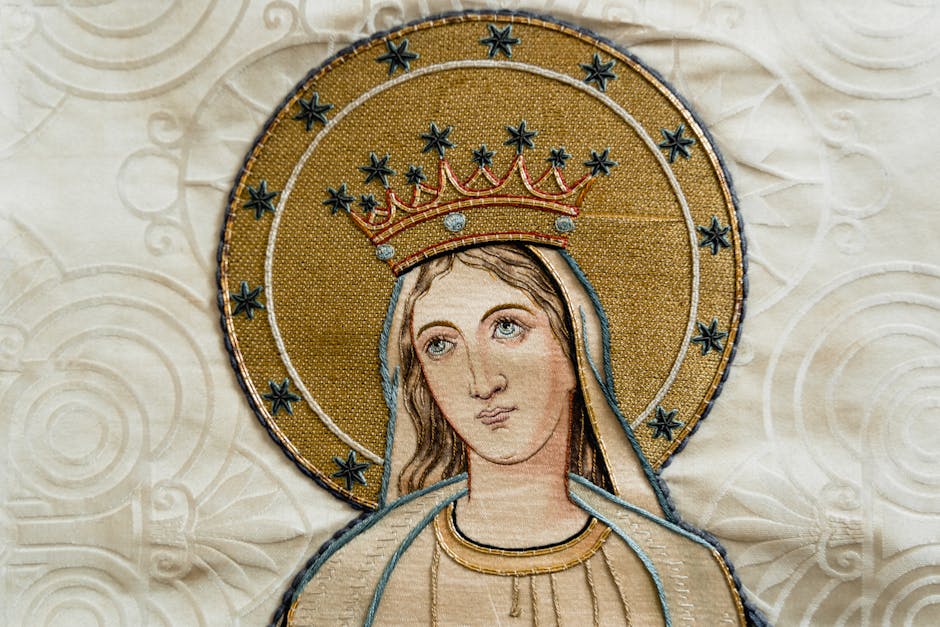
Purity and virginity had a language of their own. Lilies usually white stand for the Virgin Mary and untouched virtue. An enclosed garden (hortus conclusus) pops up around her often, not because it’s scenic, but because it invokes the Song of Songs and the idea of protected virginity. Add in snow white robes, and the theme is unmistakable: sacred purity, set apart from the everyday world.
Then there’s original sin and the long shadow it casts. Snakes slither through Eden inspired scenes, apples dangle as loaded symbols of temptation, and broken branches remind us that paradise was once whole and now isn’t. When you spot these details, you’re not just looking at scenery, you’re reading a warning or a promise, depending on the painter’s intent.
Artists weren’t just decorating walls. They were embedding theology into brushstrokes.
Artist Intent and Patron Influence
Renaissance artists weren’t painting in a vacuum they were often working under tight budgets and tighter expectations. Religious commissions, especially from powerful patrons like the Church or nobility, came with strings attached. If a bishop was footing the bill, the symbols had to toe theological lines. That’s why you often see the same safe imagery lambs for Christ, doves for the Spirit, and clear depictions of saints used again and again.
But there’s a shift when you compare public altarpieces to private devotional panels. Public works leaned toward the literal. Big statements. Clear dogma. Private pieces, however, gave artists room to play. When only a small circle would see the work, symbolism got more personal, more layered, and sometimes quietly provocative. A single fruit on a sill or an odd gesture might carry a message that questioned official narratives without saying it outright.
Some artists even used calculated ambiguity. Think of Leonardo’s subtle hand placements or Botticelli’s off balance compositions. These weren’t accidental. They were tools to suggest complexity in scripture or to raise theological questions patrons didn’t want asked publicly. It was all about how much you could say without saying too much.
Finding Symbolism in Real Paintings
Spotting symbolism in Renaissance religious art today requires more than just a glance. The key is patience and a bit of detective work. Look past the subject’s face and notice the objects around them: a vase of lilies, a single book, an oddly placed tree branch. These weren’t background clutter. They were shorthand for entire belief systems.
Lighting offers clues too. A beam from an unseen window might symbolize divine intervention. A shadow crossing a figure’s hands could hint at an impending sacrifice. Even the direction of a gaze often carries weight upward toward heaven, or sideways toward a hidden figure of importance.
Zoom out, and you’ll see that everything has purpose. Colors, positions, and even negative space often work together to lead the viewer into deeper reflection. Layered meaning doesn’t fade over time. It just asks more from modern eyes.
Not sure where to start? The newest painting directory breaks down dozens of examples, pointing out the symbols you might otherwise miss. With practice, you’ll stop just looking and start seeing.
 Ask Maryanne Smithack how they got into art movements explained and you'll probably get a longer answer than you expected. The short version: Maryanne started doing it, got genuinely hooked, and at some point realized they had accumulated enough hard-won knowledge that it would be a waste not to share it. So they started writing.
What makes Maryanne worth reading is that they skips the obvious stuff. Nobody needs another surface-level take on Art Movements Explained, Techniques of Historical Artists, Art History Insights. What readers actually want is the nuance — the part that only becomes clear after you've made a few mistakes and figured out why. That's the territory Maryanne operates in. The writing is direct, occasionally blunt, and always built around what's actually true rather than what sounds good in an article. They has little patience for filler, which means they's pieces tend to be denser with real information than the average post on the same subject.
Maryanne doesn't write to impress anyone. They writes because they has things to say that they genuinely thinks people should hear. That motivation — basic as it sounds — produces something noticeably different from content written for clicks or word count. Readers pick up on it. The comments on Maryanne's work tend to reflect that.
Ask Maryanne Smithack how they got into art movements explained and you'll probably get a longer answer than you expected. The short version: Maryanne started doing it, got genuinely hooked, and at some point realized they had accumulated enough hard-won knowledge that it would be a waste not to share it. So they started writing.
What makes Maryanne worth reading is that they skips the obvious stuff. Nobody needs another surface-level take on Art Movements Explained, Techniques of Historical Artists, Art History Insights. What readers actually want is the nuance — the part that only becomes clear after you've made a few mistakes and figured out why. That's the territory Maryanne operates in. The writing is direct, occasionally blunt, and always built around what's actually true rather than what sounds good in an article. They has little patience for filler, which means they's pieces tend to be denser with real information than the average post on the same subject.
Maryanne doesn't write to impress anyone. They writes because they has things to say that they genuinely thinks people should hear. That motivation — basic as it sounds — produces something noticeably different from content written for clicks or word count. Readers pick up on it. The comments on Maryanne's work tend to reflect that.