A Century Old Stage for the Avant Garde
The Venice Biennale has always been more than a prestigious exhibition it’s a proving ground for ideas. Since 1895, it’s tracked the pulse of global art movements, from surrealism and minimalism to political performance and digital immersion. Artists don’t just show work here they test boundaries.
Fast forward to 2026, and the Biennale remains sharp. The stakes feel higher now. The world’s in flux, so art is louder, rawer, and more direct. This year’s edition leans hard into disruption, posing tough questions about identity, truth, and power. It’s less about visual polish, more about message and momentum.
Across more than 80 national pavilions and dozens of collateral exhibitions scattered through the city this is a high pressure mix of politics, storytelling, and boundary pushing aesthetics. Venice transforms into something more than a gallery. It’s a working lab, a debate floor, a nerve center of cultural reckoning.
This Year’s Standouts: Nation by Nation
South Korea didn’t tiptoe in this year it charged forward with a hypnotic display of kinetic sculptures that question what it means to be human at all. Their pavilion feels alive, not just conceptually but literally: machines tremble, surfaces breathe, and sensors respond to viewers in real time. It’s post human, post intimacy, and deeply eerie. The work leans into our growing dependence on artificial systems and blurs biology with machinery in a way that’s hard to shake.
Brazil, in contrast, speaks with hushed power. Their installation envelops you a multi sensory immersion into climate grief, using scent, sound, and projection to simulate a world slowly unraveling. But this isn’t just doom and gloom. Embedded beneath the sorrow are narratives of resistance: Indigenous knowledge, regenerative practices, and speculative futures that carry weight, not fantasy.
Then there’s Nigeria. Often overlooked, not this year. Their pavilion delivers a searing yet nuanced reflection on digital borders and forced migration. There’s an arresting tension between displacement and hyper connectivity people whose bodies cross too many boundaries and IP addresses that cross even more. The country’s rising curatorial ambition is impossible to ignore.
While debutantes innovate with urgency, established powerhouses like the U.S., France, and Japan seem to be reckoning with themselves. They’ve stepped out of the comfort of artistic dominance and into spaces that question their cultural, political, and economic legacies. From France’s dismantled colonial monuments reconstructed as haunting sculptures, to Japan blending traditional craft with critiques of digital commodification, these pavilions don’t celebrate empire they interrogate it.
Taken together, these national contributions make one thing clear: in 2026, art at the Biennale isn’t hiding behind metaphor. It’s saying the quiet part out loud.
Curatorial Themes in 2026
This year’s Venice Biennale isn’t worried about tradition it’s reconfiguring it. The underlying current across pavilions and installations is clear: power is shifting. Decentralization isn’t just a political idea here it’s artistic, geographic, and structural. Artists from historically underrepresented regions aren’t asking for a seat at the table anymore. They’re building their own.
Post colonial critique isn’t subtle, either. From archival deconstructions to rewritten narratives of empire, creators are confronting the residue of history with sharpness and resolve. It’s less about telling stories and more about reclaiming who gets to tell them.
Meanwhile, you can’t pin this Biennale down as either tech centric or traditional. It’s both. Hand dyed fabrics sit next to VR landscapes. Oil paintings hang across from immersive AI generated simulations. There’s a new aesthetic hunger for hybridization where heritage techniques and emerging tech don’t just coexist, they collaborate.
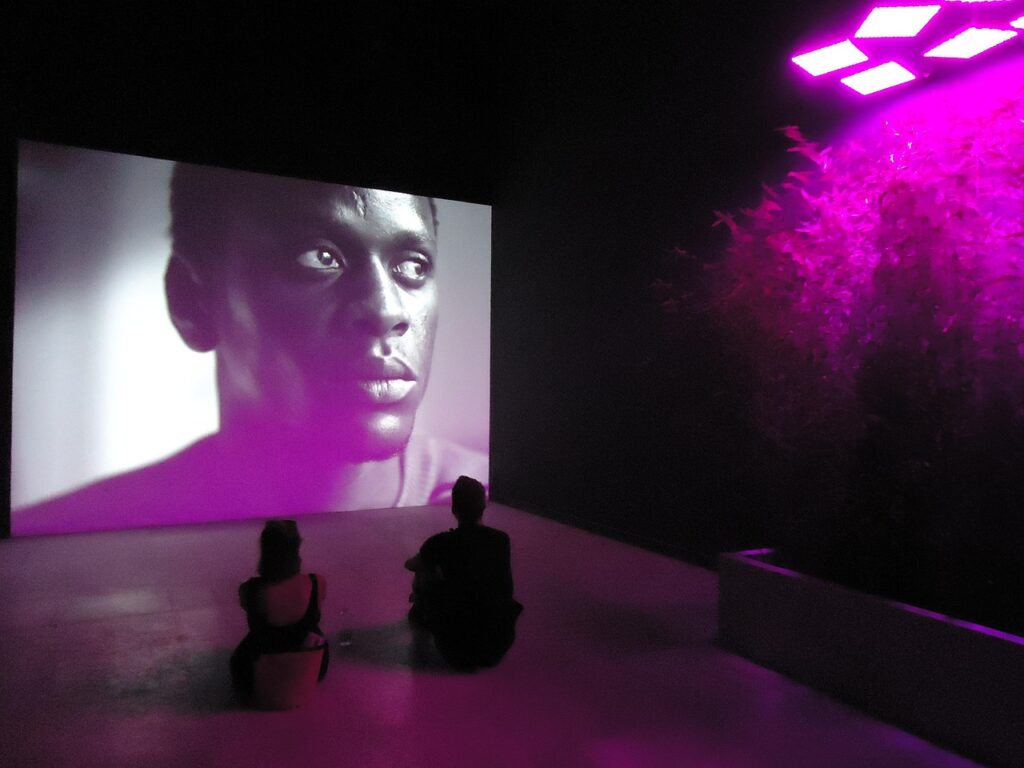
And it’s interactive. This isn’t a walk through and nod affair. Viewers are being invited in sometimes literally. There are landscapes you can move through, soundscapes that shift based on body position, and AI murals that regenerate based on crowd mood. Participation isn’t a side note. It’s the point.
Across it all, a thread of unease runs deep. Surveillance systems are dissected in visual metaphors. Protest culture gets coded into digital textures. And the idea of memory what we remember, what we’re made to forget is cracked open and stretched onto unusual canvas formats. These aren’t passive works. They are engineered to stare back.
What the Biennale Reveals About Art’s Role Today
The aesthetic polish hasn’t disappeared, but it’s no longer the point. What we’re seeing across the Venice Biennale is a more pointed, intentional shift message over medium. That shift isn’t new, but in 2026, it cuts deeper. Artists aren’t working around the world’s fractures; they’re working through them. Protest, grief, rage, irony these aren’t subtexts. They’re center stage.
This year’s Venice isn’t offering escape. It’s confrontation. Installations don’t just engage your eyes; they demand attention politically, culturally, emotionally. Whether it’s climate collapse rendered in raw tableau, or surveillance decoded into sculpture, the work refuses to whisper.
In this context, Venice becomes more than a gathering of national pavilions. It’s a litmus test a mirror for what matters now. And more than that, a megaphone. What’s exhibited here doesn’t stay here. It leaves with curators, critics, funders, and TikTok walkthroughs. It influences conversations in Berlin, New York, Lagos, Seoul. The Biennale isn’t the whole story, but it’s a powerful slice of it and right now, it’s speaking loud and clear.
For Context: Other Institutional Voices
While the Biennale propels contemporary art into techno hybridity and geopolitical critique, legacy institutions are navigating a different kind of transformation. Case in point: The Met’s latest show on Dutch Golden Age painters. It’s not about resisting change but about recontextualizing history for today’s viewer. Think: annotated labels that confront colonial networks, or guided tours that link 17th century trade to current global inequities.
This kind of curation sits in sharp contrast to the speculative and immersive works saturating Venice. But both ends of this spectrum are asking the same questions: What do we preserve, what do we challenge, and who gets to decide? The friction between retrospective exhibitions and experimental installations isn’t a problem it’s the point.
For a closer look at how tradition is reckoning with modern expectations, read our full feature on The Met’s Latest Exhibition on Dutch Golden Age Painters.
Final Take
The Venice Biennale 2026 isn’t aiming to spoon feed conclusions. It’s not a spectacle for easy consumption it’s a provocation. The art on display is only half the story. The real weight lies in the unease it stirs, the questions it refuses to tidy up. In a world cycling through crises at full speed, clarity is rare. The Biennale leans into that discomfort.
This year, the strongest works pull back on resolution. They deal in fragmentation, friction, open ended narratives. Climate, identity, power, artificiality big themes, no clean answers. And that’s the point. What matters most isn’t just what’s being shown it’s the space being held for dialogue, confrontation, and doubt.
In a time when art can be flattened into content, the Biennale pushes back. It wants you to sit with the work, not scroll past it. To not just look but ask. And ask again.